Forest Hills
Lifestyle & Vibe
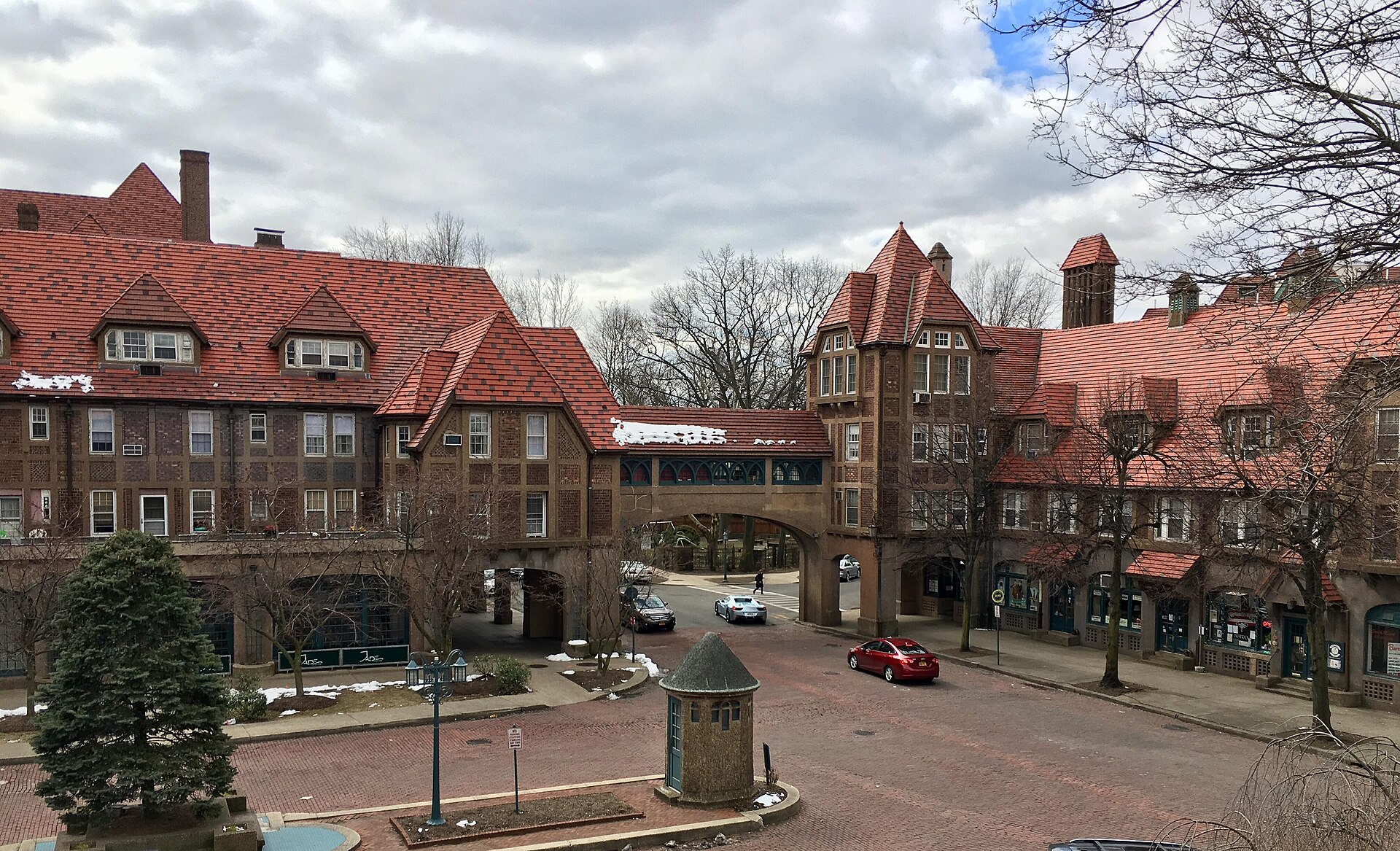
The physical environment of Forest Hills is singularly unique, defined by the masterful urban planning of Forest Hills Gardens, designed by Frederick Law Olmsted Jr. and Grosvenor Atterbury. The neighborhood centers around historic Station Square, an architectural landmark of red brick paving, arched arcades, and a clocktower evoking an English village. The area is enveloped in greenery, with curved, tree-lined streets leading to the historic West Side Tennis Club and Forest Hills Stadium, alongside direct proximity to Flushing Meadows-Corona Park and Forest Park. Connectivity is provided by the Long Island Rail Road (14 minutes to Midtown) and the E/F/M/R subway lines.
Real Estate & Architecture
The real estate market in Forest Hills represents some of the most strictly regulated and picturesque residential architecture in New York City. The private Forest Hills Gardens enclave features magnificent Tudor-style single-family estates and attached townhouses defined by steep slate roofs, half-timbering, and intricate brickwork on private parcels. Outside the Gardens enclave, central corridors along Queens Boulevard feature pre-war cooperative buildings with spacious layouts and Art Deco detailing, alongside modern luxury high-rise condominium developments.
Dining & Culture
Austin Street functions as the premier commercial and dining artery, stretching from 71st Continental Avenue to Ascan Avenue, seamlessly balancing historic storefronts with modern retailers. The dining scene is robust and localized: Forest Hills Station House at 106-11 71st Avenue offers an elevated craft gastropub experience steps from the LIRR; Jade Eatery & Lounge operates in Station Square featuring a serene koi pond; Nick's Pizza on Ascan Avenue delivers classic coal-fired pies; and 5 Burro Café on Austin Street serves vibrant Mexican fare.