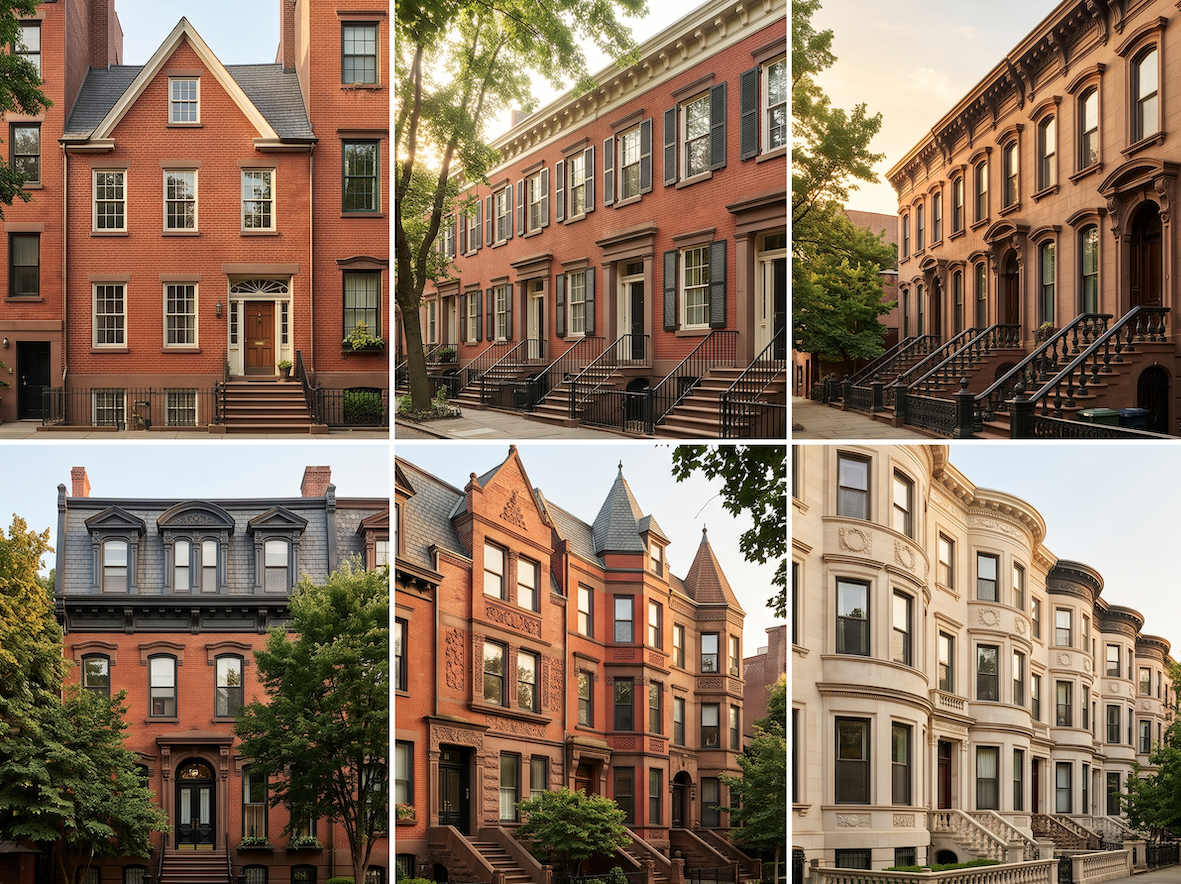
Explore Brooklyn's Historic Townhouse Styles
Explore Brooklyn's Historic Townhouse Styles
A Neighborhood Guide to Brooklyn’s Iconic Townhouses
In New York City, people often call every attached brick-and-stone home a "brownstone." Technically, a townhouse is any single- or multi-family home sharing walls with its neighbors, a rowhouse is one built as part of a uniform row, and a brownstone specifically refers to a house clad in reddish-brown Triassic-Jurassic sandstone.
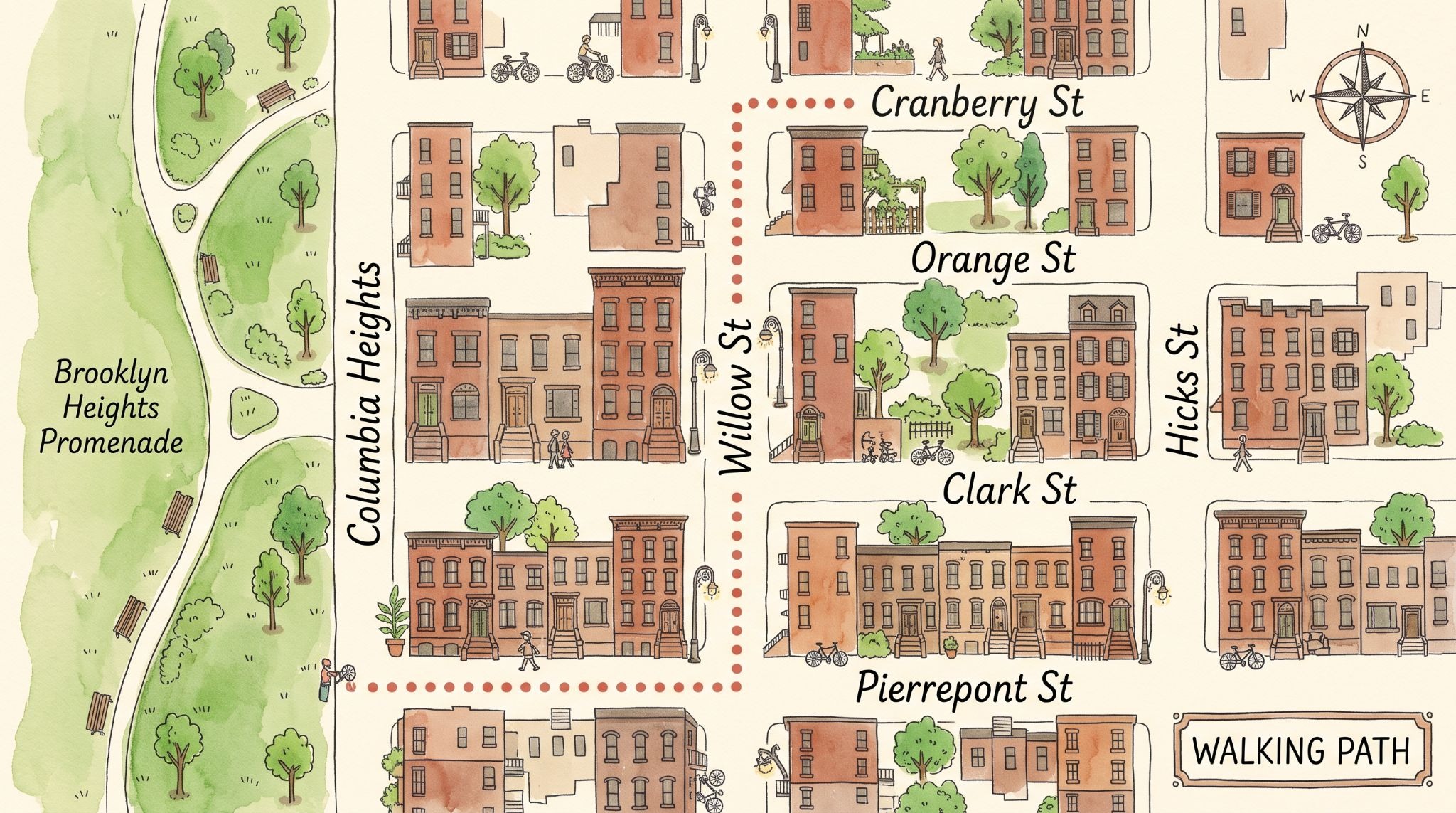
Exploring Brooklyn’s residential blocks reveals how moving just three streets over can shift you from 1820s red-brick minimalism to soaring 1890s Romanesque stone arches. Use the timeline below to see where signature townhouse styles stand, complete with walking maps and preservation details from the NYC Landmarks Preservation Commission (LPC).
1. Federal Style (1790s–1830s)
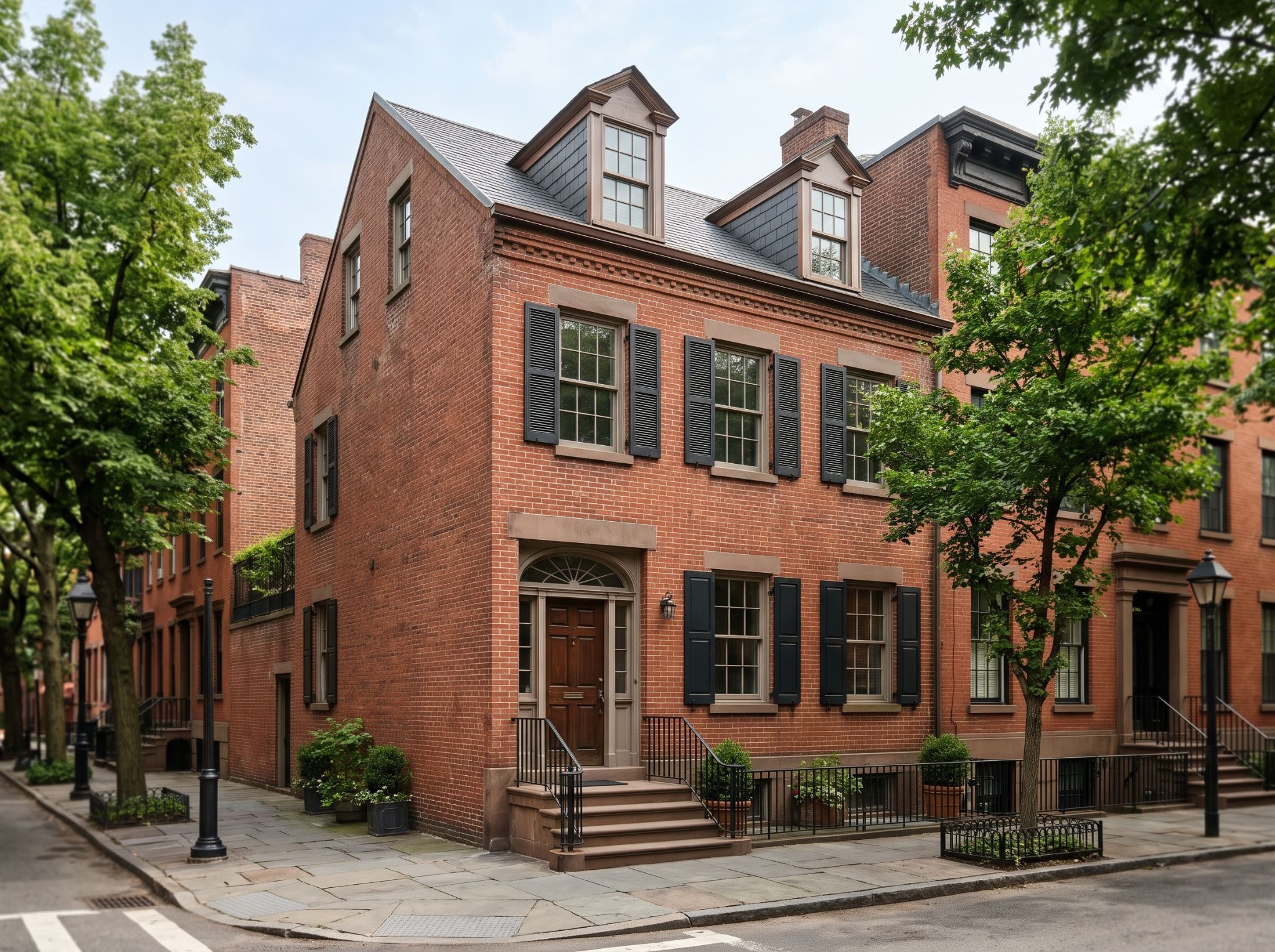
Federal rowhouses represent Brooklyn’s earliest era of urban development, built when the area was transitioning from farmland and shipping villages into a proper city.
- Signature Details: Low-slung proportions (usually 2.5 to 3 stories tall), Flemish-bond red brickwork, pitched gable or gambrel roofs with dormer windows, delicate fanlight transoms and sidelights around the front door, and slender, understated ironwork. Unlike later styles, Federal homes sit very close to the sidewalk with low, modest stoops.
- Where to Find Them: Brooklyn Heights (notably Middagh Street, Cranberry Street, and Willow Street—including the famous "Fruit Streets") and Vinegar Hill (around Hudson Avenue and Front Street).
- Browse Listings: Brooklyn Heights Townhomes on Compass | Vinegar Hill Townhomes on Compass
2. Greek Revival (1830s–1850s)
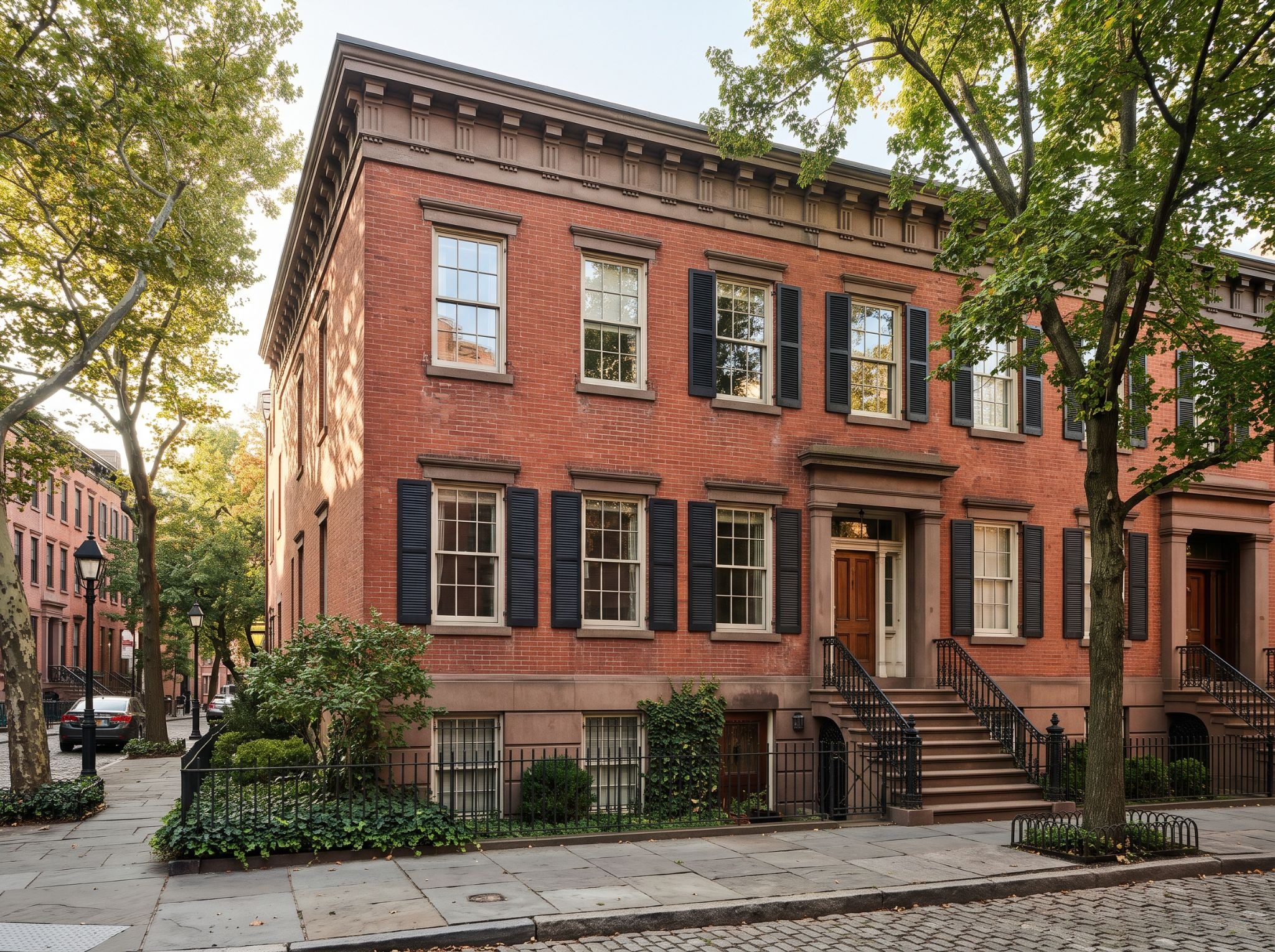
Before ornate Victorian facades took over, Greek Revival was the gold standard of understated, temple-inspired symmetry.
- Signature Details: Willow Street preserves one of the most intact pre-Civil War red-brick streetscapes in New York City, featuring flat stone window lintels, dentil roof moldings, and clean, recessed entryways with grand parlor-floor heights.
- Where to Find Them: Willow Street (between Pierrepont and Cranberry Streets in Brooklyn Heights).
- Browse Listings: Brooklyn Heights Townhomes on Compass
3. Italianate (1850s–1870s)
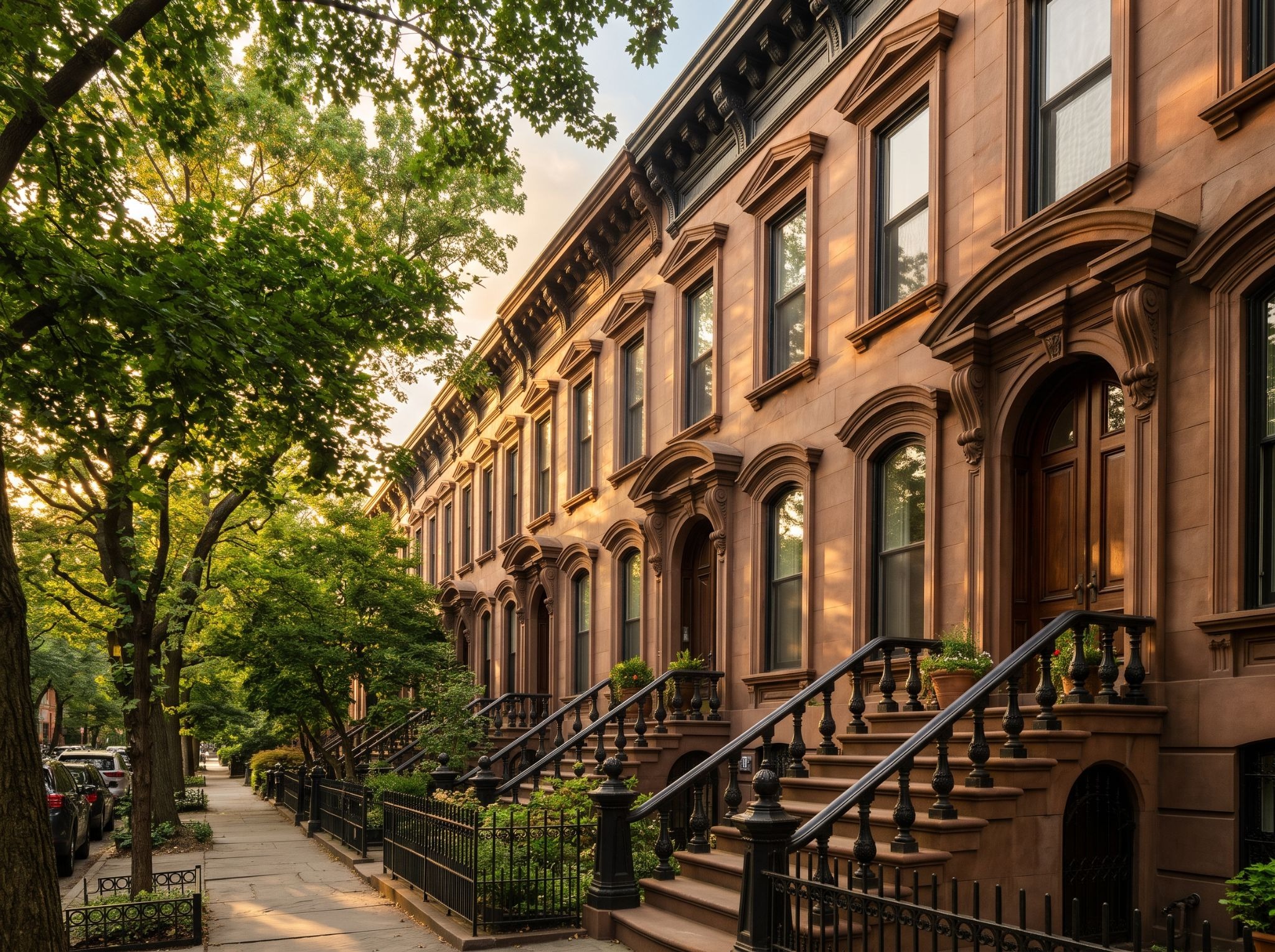
The quintessential Brooklyn brownstone. Modeled after northern Italian villas, this style defines the visual identity of "Brownstone Brooklyn."
- Signature Details: Deeply overhanging bracketed cornices, rounded parlor-floor windows with carved stone hoods, and high brownstone stoops with decorative cast-iron handrails.
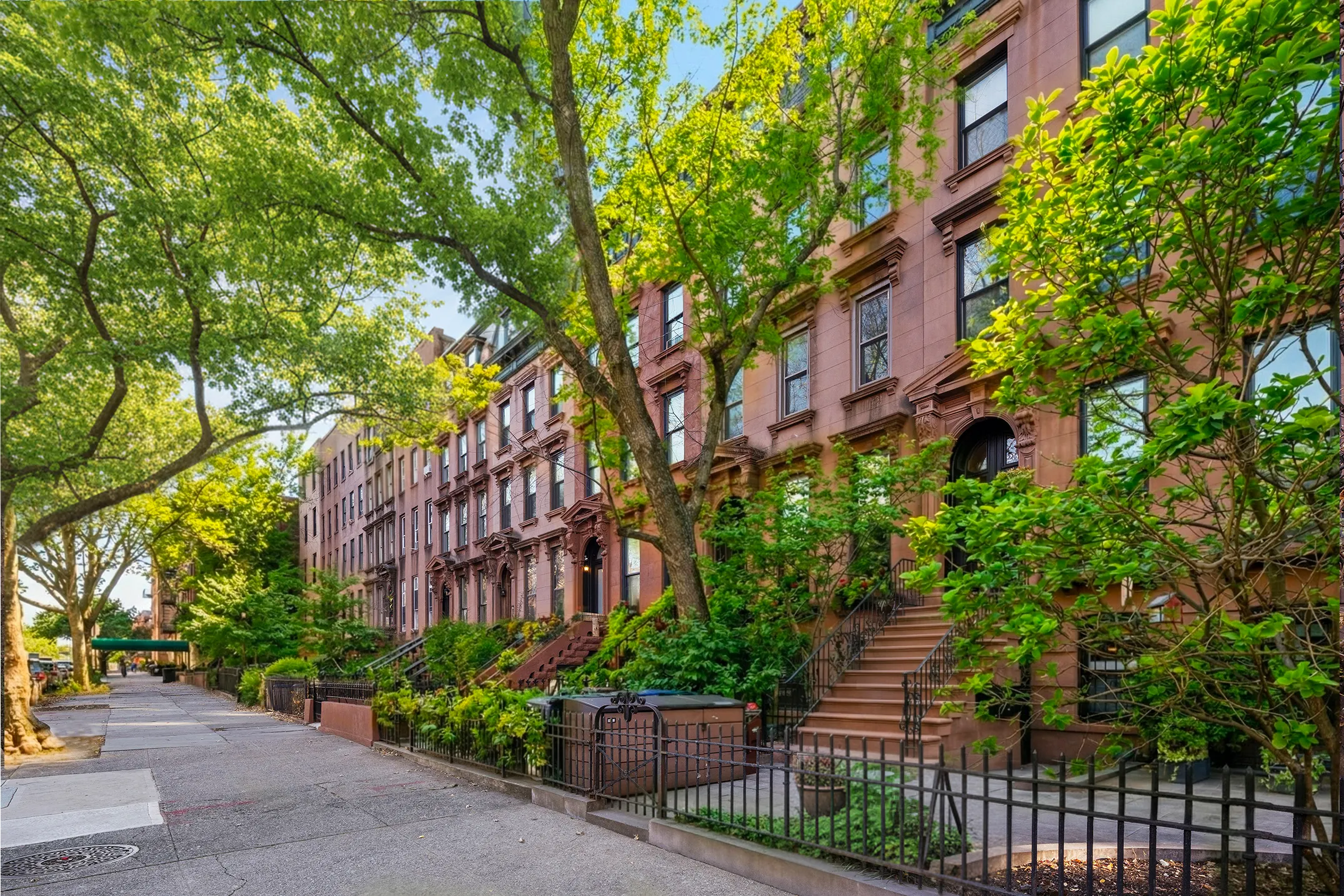
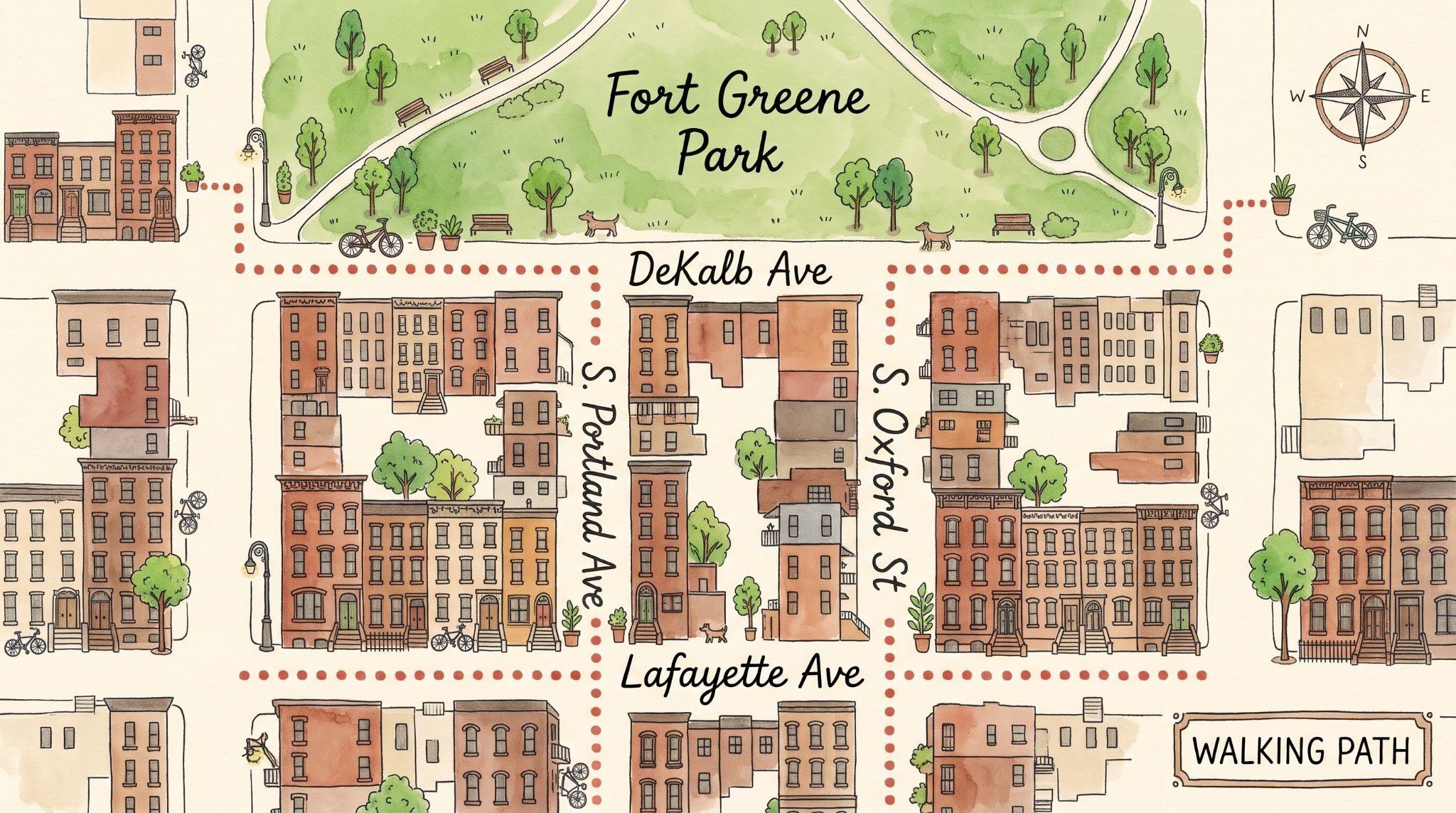
- Where to Find Them: South Portland Avenue & South Oxford Street (between DeKalb and Lafayette Avenues in Fort Greene); President Street (between Hoyt and Smith Streets in Carroll Gardens). S. Portland Avenue sits correctly west of S. Oxford Street directly south of Fort Greene Park.
- Browse Listings: Fort Greene Townhomes on Compass | Carroll Gardens Townhomes on Compass
4. Second Empire (1860s–1880s)
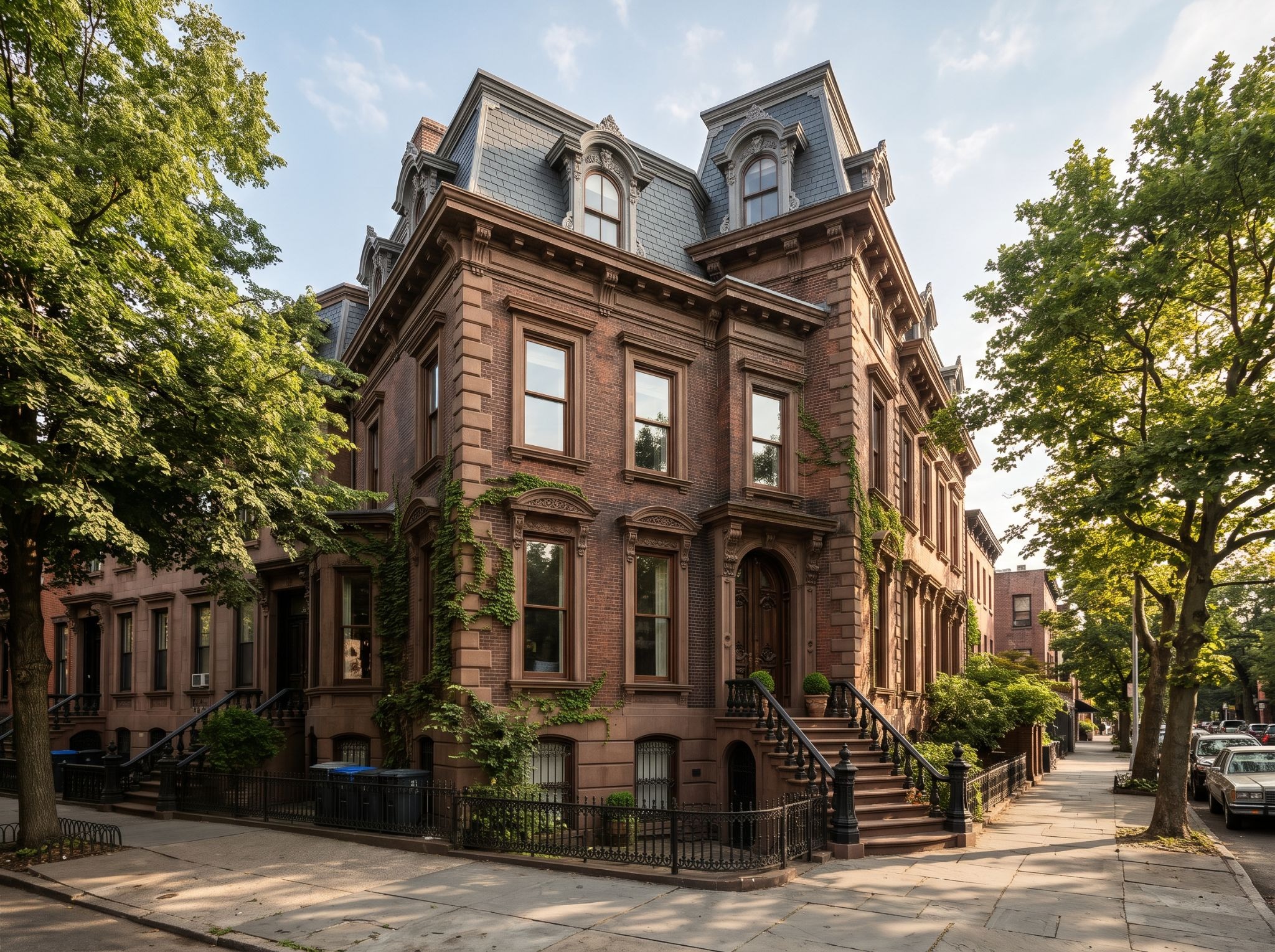
Popularized during Paris’s mid-century redevelopment, this French-influenced style brought a grandiose flair to Brooklyn Heights, Clinton Hill, and Fort Greene.
- Signature Details: Steeply pitched, slate-tiled mansard roofs pierced by ornate dormer windows. This roofline gave top-floor bedrooms full ceiling height without angled attic walls.
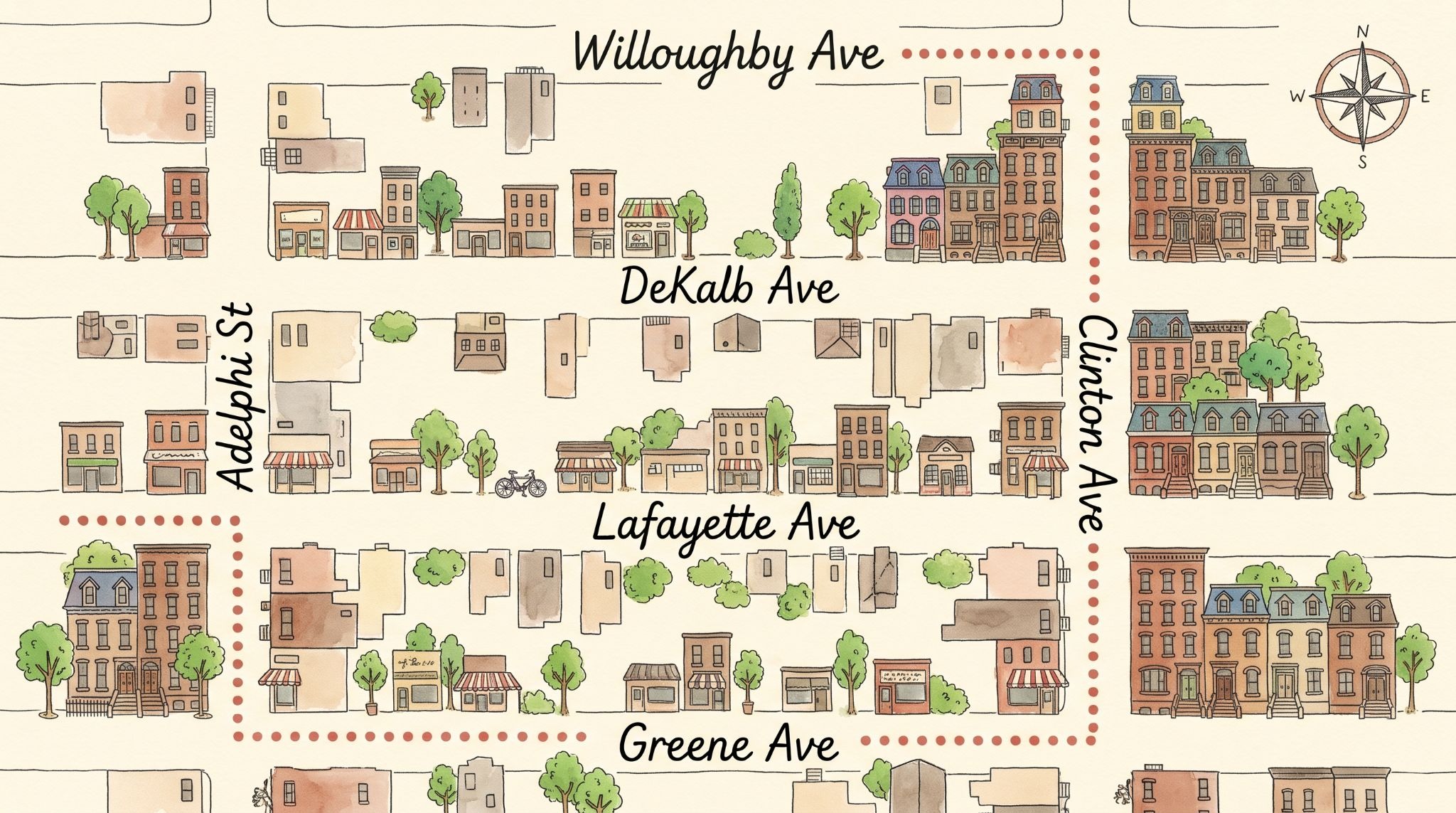
- Where to Find Them: Clinton Avenue (between Willoughby and Greene Avenues in Clinton Hill); Adelphi Street (near Lafayette Avenue in Fort Greene).
- Browse Listings: Clinton Hill Townhomes on Compass | Fort Greene Townhomes on Compass
5. Neo-Grec & Queen Anne (1870s–1890s)
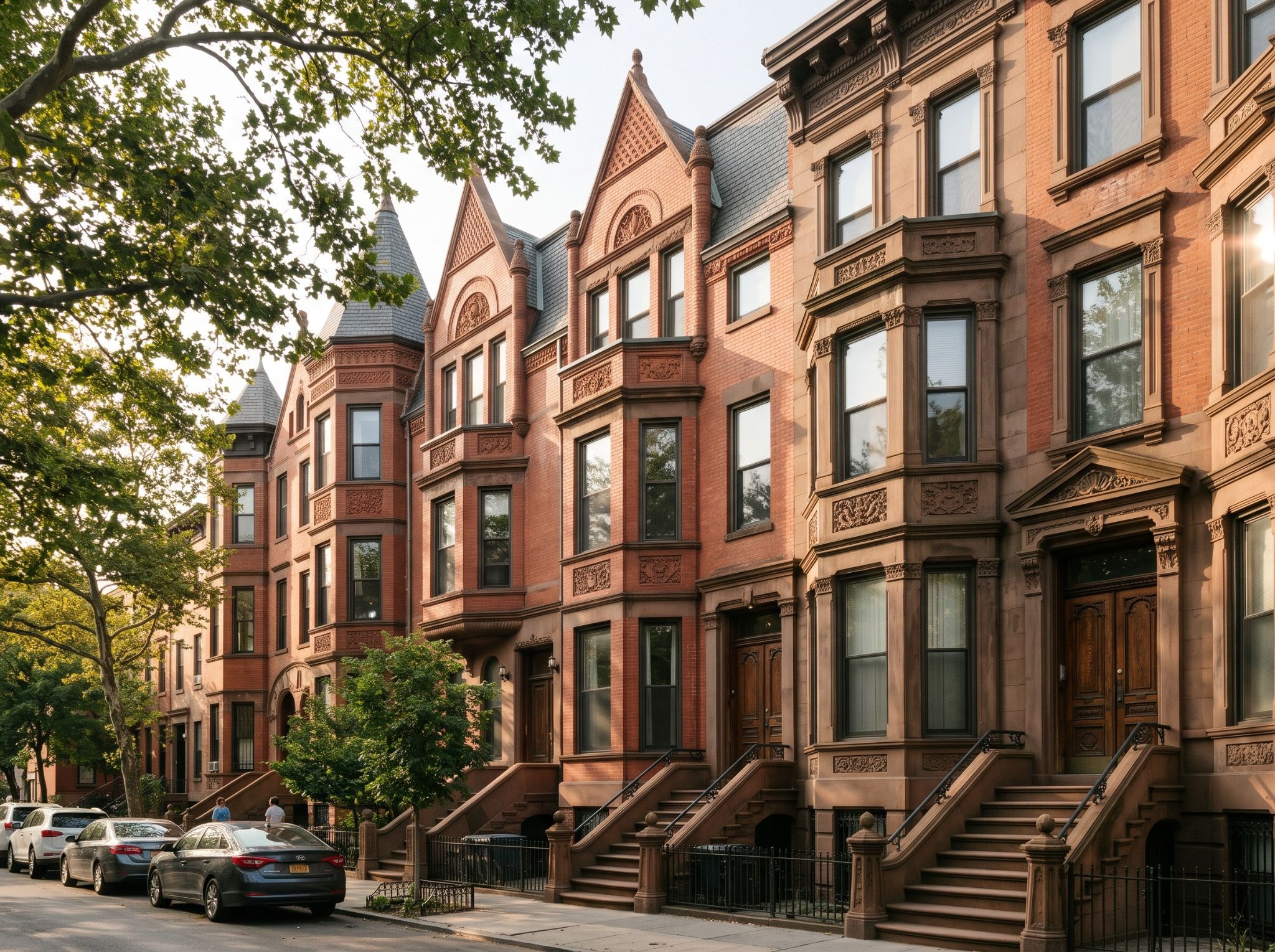
The Industrial Revolution brought high-precision mechanical stone cutting, resulting in the highly angular, carved facades of the late 19th century, often mixed with playfully eccentric Victorian details.
- Signature Details: Sharp, angular stone carvings incised directly into the brownstone (Neo-Grec) alongside playful, asymmetrical bays that mix red brick, brownstone, and decorative terracotta relief panels, turrets, and stained glass (Queen Anne).
- Where to Find Them: MacDonough Street (near Stuyvesant Avenue in Stuyvesant Heights, Bedford-Stuyvesant).
- Browse Listings: Bedford-Stuyvesant Townhomes on Compass
6. Romanesque Revival (1880s–1890s)
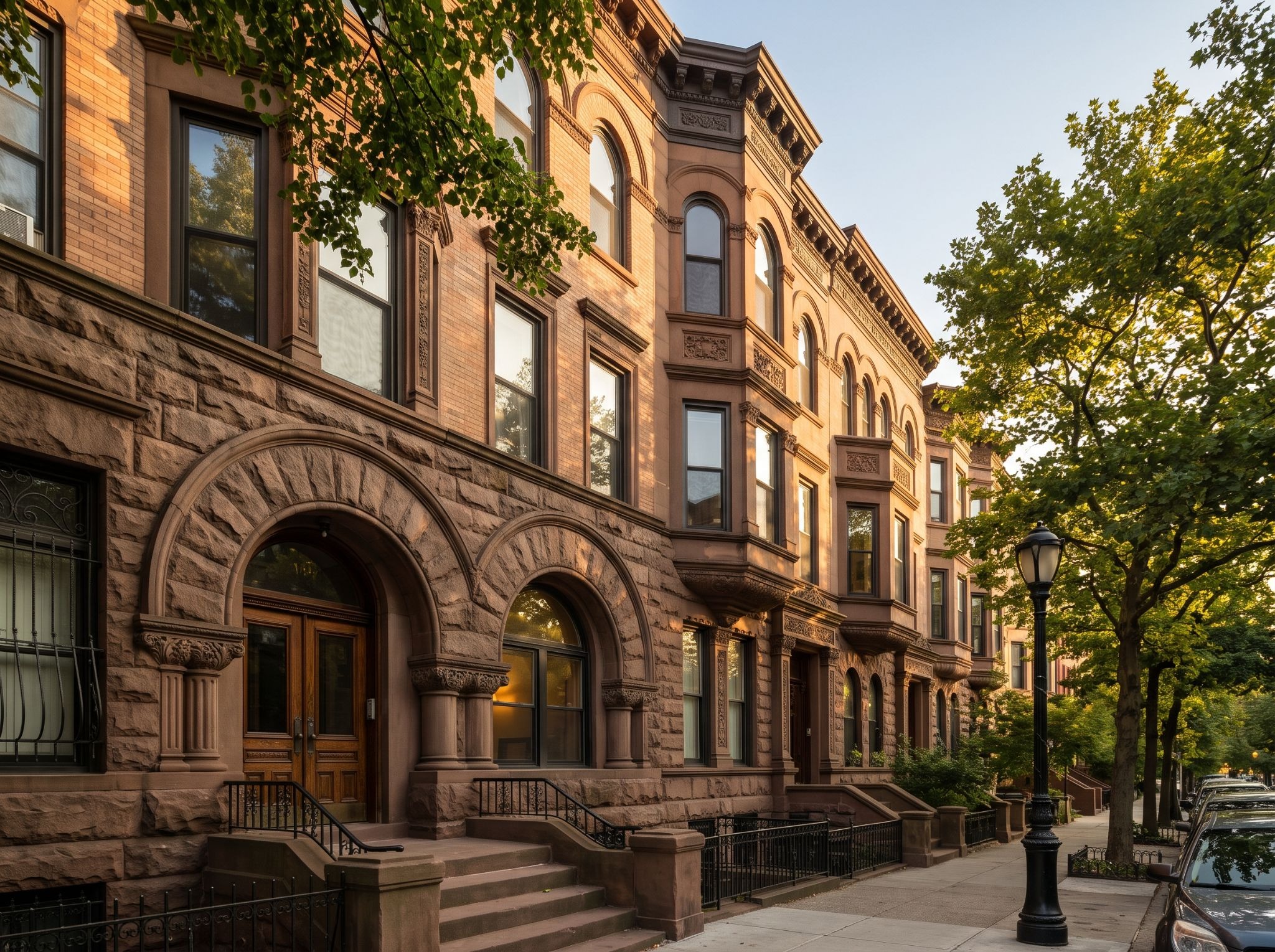
Moving away from brick and smooth brownstone, Romanesque Revival introduced an imposing, fortress-like aesthetic to Brooklyn’s affluent blocks.
- Signature Details: Rough-faced ("rusticated") stone bases, wide semicircular arches over entryways, squat columns, and intricate, often gargoyle-like carvings.
- Where to Find Them: Montgomery Place (between Eighth Avenue and Prospect Park West in Park Slope).
- Browse Listings: Park Slope Townhomes on Compass
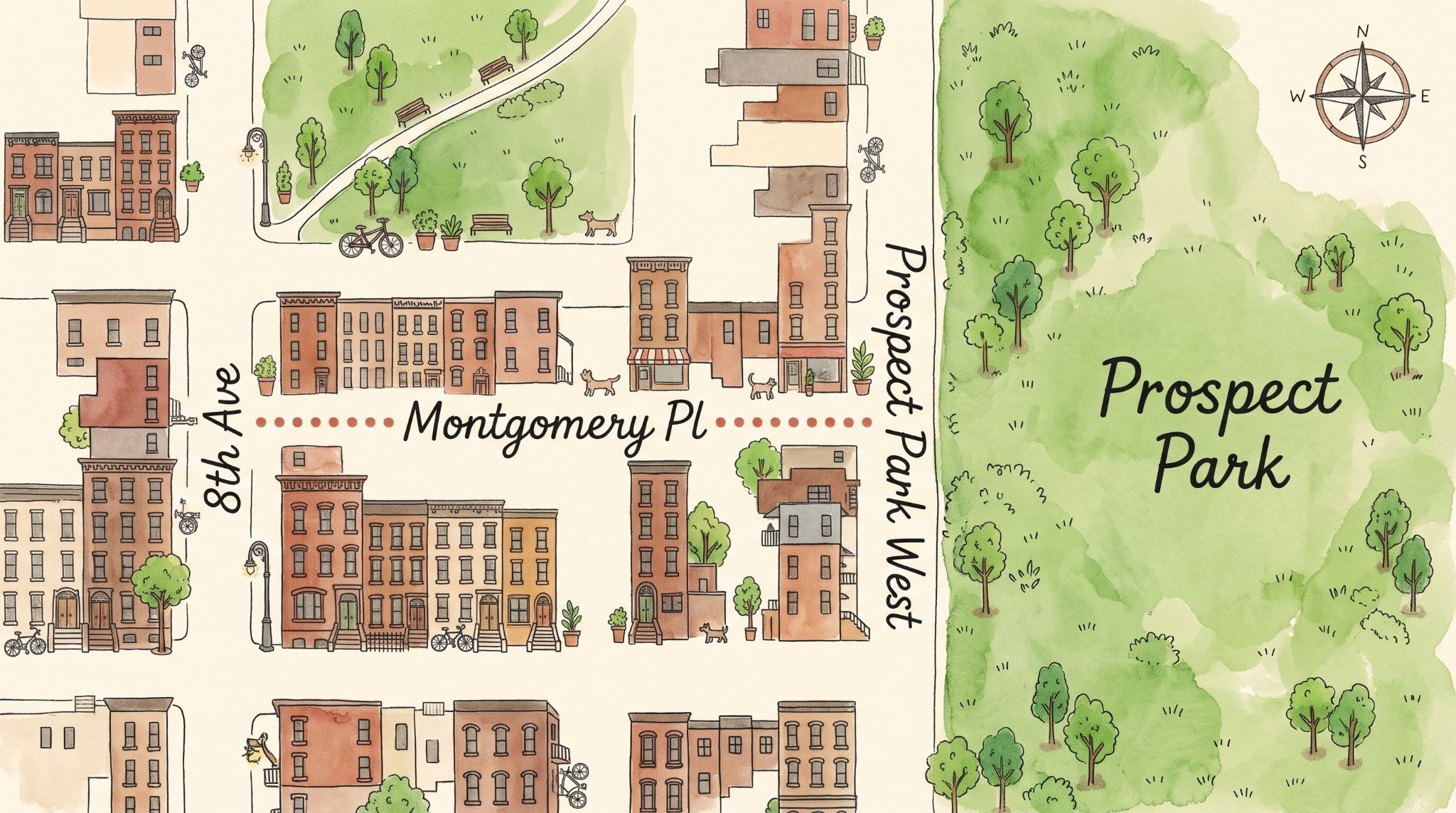
7. Renaissance Revival & Beaux-Arts (1890s–1910s)
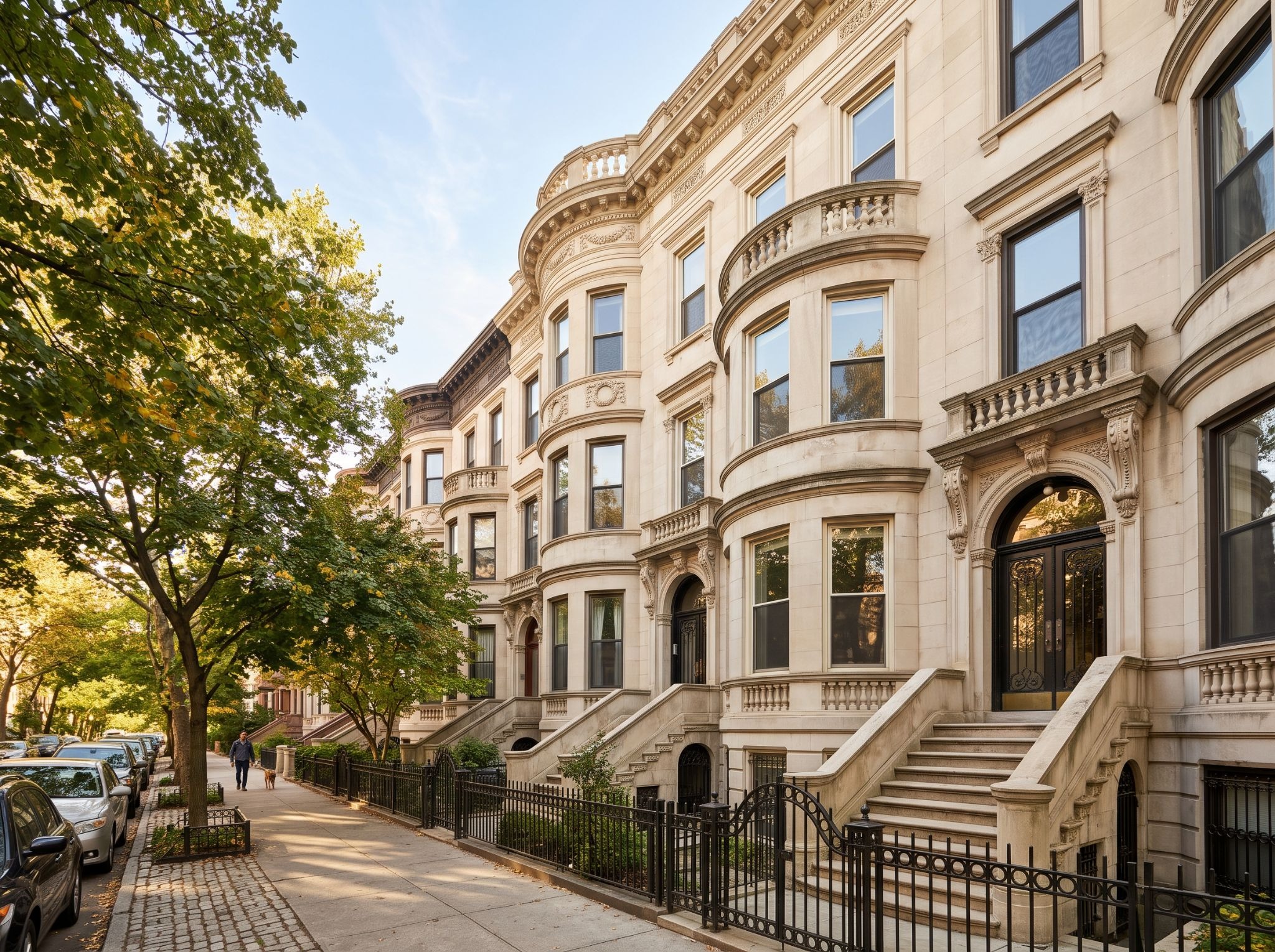
As the 20th century neared, architects rejected the heavy, dark Romanesque and Victorian styles, turning back to the grace and lightness of the Italian Renaissance.
- Signature Details: Crisp, pale Indiana limestone facades, curved three-story bay windows, and classical wreaths, garlands, and balustrades.
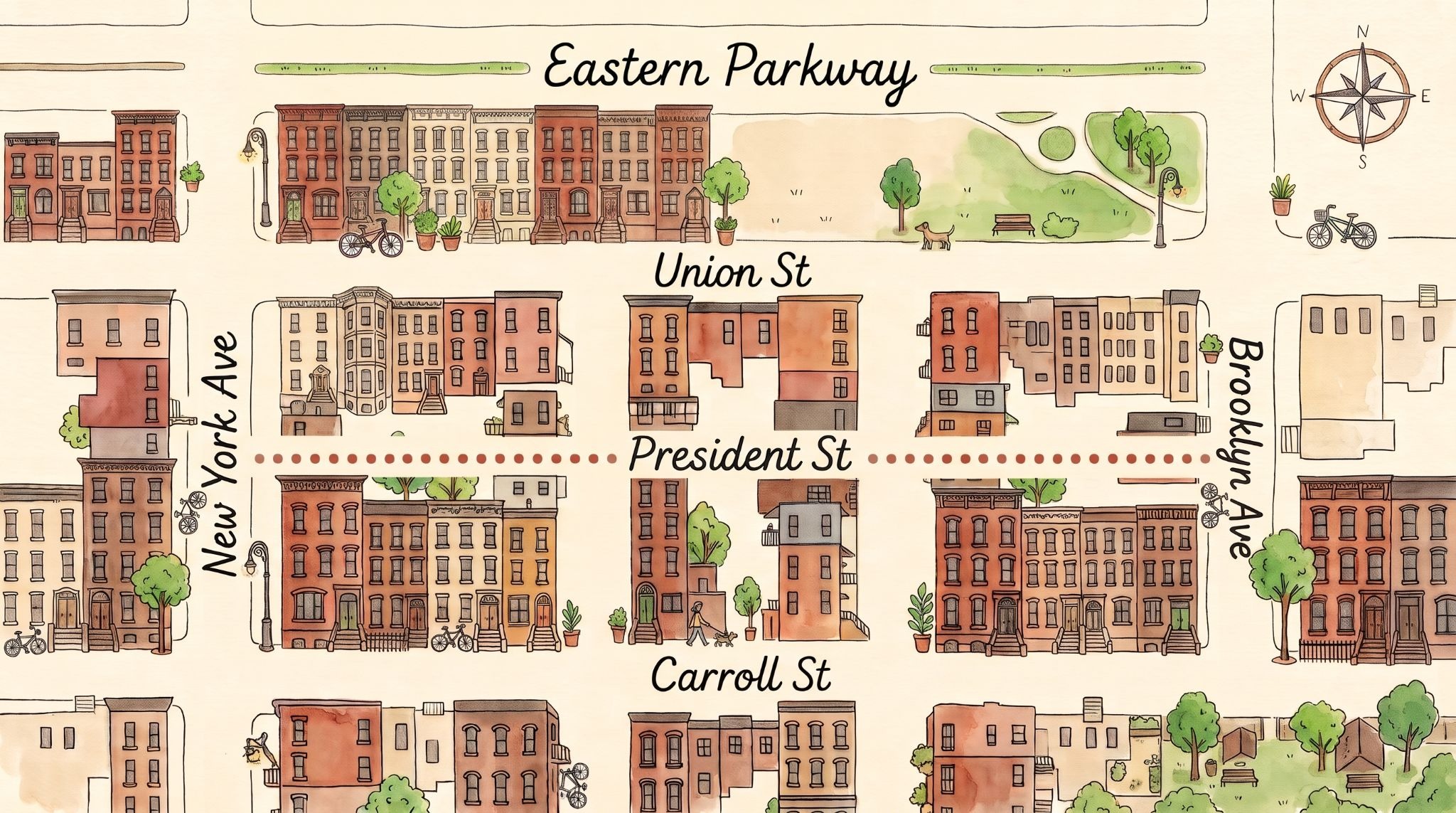
- Where to Find Them: President Street (between New York and Brooklyn Avenues in Crown Heights North).