Manhattan
Lower East Side
A culturally profound neighborhood blending 19th-century tenement history with cutting-edge contemporary art galleries and ultra-modern waterfront condominium towers.
Average home price: $740K
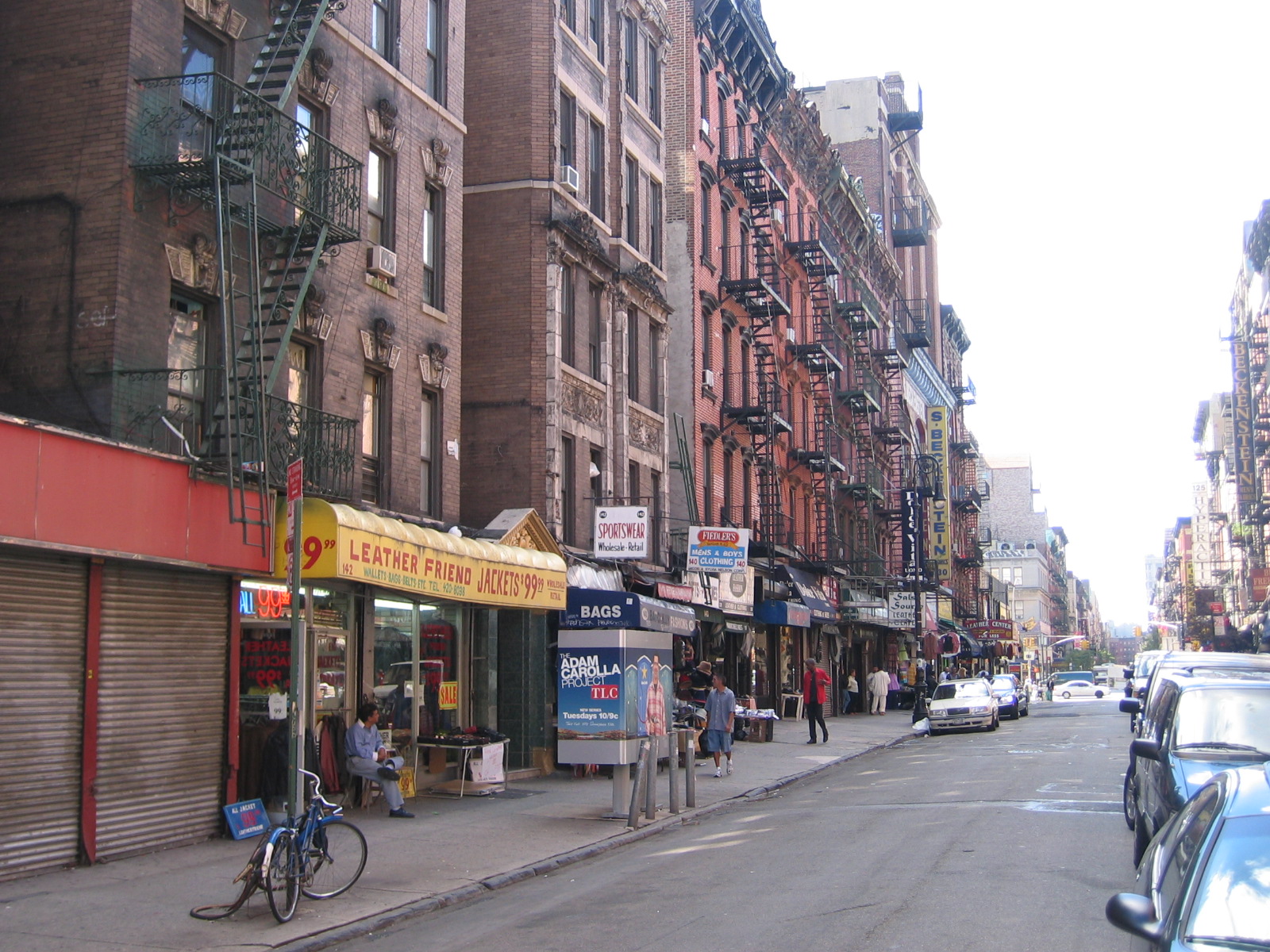
- Tenement Architecture
- Essex Crossing
- Waterfront Condos
- Contemporary Art District
The Scene
The scene on the Lower East Side is dense, walkable, and nearly always in motion. Orchard and Ludlow Streets are the neighborhood's signature blocks, lined with tenement walk-ups, galleries, bars, and restaurants, while Delancey Street runs wide toward the Williamsburg Bridge. Historic brick facades sit directly beside new glass-fronted development.
By day the rhythm comes from Essex Market, neighborhood schools, and shoppers along Grand and Delancey Streets. After dark the energy moves to Ludlow Street's bars and the side-street restaurants, softening around Sara D. Roosevelt Park. It is a neighborhood that feels deeply lived-in and continuously remade.
Lifestyle & Vibe
The Lower East Side presents a highly textured and complex physical environment where profound historical significance meets rapid contemporary evolution. The streetscape is a striking juxtaposition of dense, multi-story brick tenement blocks and sweeping modern infrastructure. Public open space is anchored by Seward Park and the sprawling East River Park, which provides extensive waterfront access, recreational fields, and pedestrian paths looking out toward Brooklyn. The neighborhood retains its historic role as a foundational entry point in New York's cultural history.
Cultural institutions carry immense weight here, most notably the Tenement Museum, which preserves the architectural and lived history of the area's 19th-century structures. Parallel to this history is a thriving contemporary art scene, anchored by the New Museum and dozens of prestigious galleries like Miguel Abreu and Perrotin. Transportation is facilitated by the Delancey Street-Essex Street station hub, offering critical access to the F, M, J, and Z subway lines, effectively linking the district to Midtown and Brooklyn.
Real Estate & Architecture
The real estate market in the Lower East Side is defined by a divergence in architectural typologies. The historic core is comprised of classic five- and six-story tenements, many falling under the protection of the East Village/Lower East Side Historic District designated in 2012. These pre-war buildings, often characterized by intricate brickwork, Greek Revival styling, fire escapes, and compact floor plates, dominate the co-op market and provide authentic, character-rich living spaces.
Contrasting sharply with the low-rise historic fabric are the hyper-modern luxury developments that have reshaped the skyline, particularly near the waterfront and the Essex Crossing mega-development. Monumental glass-walled condominium towers, such as One Manhattan Square, offer panoramic river views and comprehensive amenity packages, including 70-seat movie theaters, indoor swimming pools, and private bowling alleys. This duality between preserved 19th-century architecture and 21st-century luxury high-rises creates one of the most dynamic real estate environments in the city.


Dining & Culture
The culinary landscape of the Lower East Side is legendary, operating as a continuous bridge between century-old culinary traditions and bold new dining concepts. The neighborhood retains indispensable heritage institutions such as Katz's Delicatessen and Russ & Daughters, which continue to anchor the area's food culture with authentic, historic fare. Simultaneously, the historic Essex Market has been revitalized within the new Essex Crossing development, serving as a sprawling, modern culinary hall that houses dozens of local purveyors.
Beyond the heritage sites, the commercial corridors are densely packed with highly acclaimed, innovative restaurants and a vibrant hospitality scene. Establishments like Han Dynasty offer robust regional cuisine, while small-footprint cafes, subterranean cocktail lounges, and modern bistros line streets such as Orchard, Ludlow, and Clinton. The retail environment mirrors this energy, featuring a mix of vintage apparel, independent streetwear boutiques, and specialized mid-century furniture galleries.
Getting Around
The Lower East Side is one of the best-connected parts of downtown Manhattan. The Delancey Street–Essex Street station is the neighborhood hub, served by the F, M, J, and Z lines and located at the foot of the Williamsburg Bridge. The F also stops at East Broadway and Second Avenue, the B and D serve Grand Street, and the J and Z stop at Bowery — giving direct links to Midtown, the Financial District, and Brooklyn.
On the surface, the M14A-SBS and M14D-SBS provide crosstown service, and the M15 and M15-SBS run along First and Second Avenues. The NYC Ferry stops at Corlears Hook Park on the South Brooklyn route, about ten minutes from Pier 11/Wall Street. The Williamsburg Bridge has a dedicated bike and pedestrian path with an entrance at Clinton and Delancey Streets, and Citi Bike docks are common throughout the neighborhood.
Things To Do
The Lower East Side is a neighborhood to explore on foot. The Tenement Museum on Orchard Street interprets the lives of the immigrant families who shaped the area, and the Museum at Eldridge Street preserves a landmark 1887 synagogue. The New Museum on the Bowery anchors a contemporary art corridor that includes the International Center of Photography on Essex Street and dozens of smaller galleries.
For open space, Seward Park, Sara D. Roosevelt Park, Corlears Hook Park, and the East River Park esplanade offer playgrounds, ball fields, and waterfront paths, with Pier 35 adding a small beach and skyline views. Essex Market, the vintage shops and boutiques along Orchard Street, and the neighborhood's bars and music venues round out the options.
Restaurants & Dining
Dining on the Lower East Side spans more than a century of New York food culture. Katz's Delicatessen, at 205 East Houston Street, has been serving its pastrami since 1888, and Russ & Daughters Cafe on Orchard Street continues the appetizing tradition of a shop founded in 1914. Di Palo's Fine Foods on Grand Street and the historic Essex Market, now housed at 88 Essex Street, are neighborhood institutions in their own right.
Beyond the classics, the area supports a deep contemporary dining scene — seasonal small plates, regional Indian and other international kitchens, natural-wine bars, and modern bistros — clustered along Orchard, Ludlow, Clinton, and Division Streets. From a deli sandwich at midday to a tasting menu at night, choices are rarely in short supply.
Schools
The Lower East Side is served by New York City Public Schools' District 1, which covers Manhattan's Lower East Side and East Village. Zoned elementary options include P.S. 110 Florence Nightingale on Delancey Street, P.S. 42 Benjamin Altman, P.S. 140 Nathan Straus, and P.S. 20 Anna Silver.
At the secondary level, the neighborhood is home to New Design High School, University Neighborhood High School, Bard High School Early College Manhattan, and the Lower East Side Preparatory High School, among others. Families also have access to a range of charter, private, and parochial schools in the surrounding area. Because zones and admissions vary by address, prospective residents should confirm current school boundaries and programs before choosing a home.
Conclusion
The Lower East Side is a neighborhood of layers. Tenement streets, landmark synagogues, and a century-old market sit beside the New Museum, Essex Crossing, and a rising waterfront skyline, giving residents a rare blend of deep history and steady change. With one of downtown's strongest subway hubs, a dining and nightlife scene that spans generations, and genuine community institutions, it remains one of the most compelling places to live in Manhattan.
The real estate reflects that range — restored pre-war co-ops and walk-ups on the historic blocks, new condominiums around Essex Crossing, and full-service towers along the East River. For buyers who want character, convenience, and a neighborhood that keeps evolving, the Lower East Side holds enduring appeal.